Rotating the tyres on a Tesla: how often, and the special case of staggered wheels
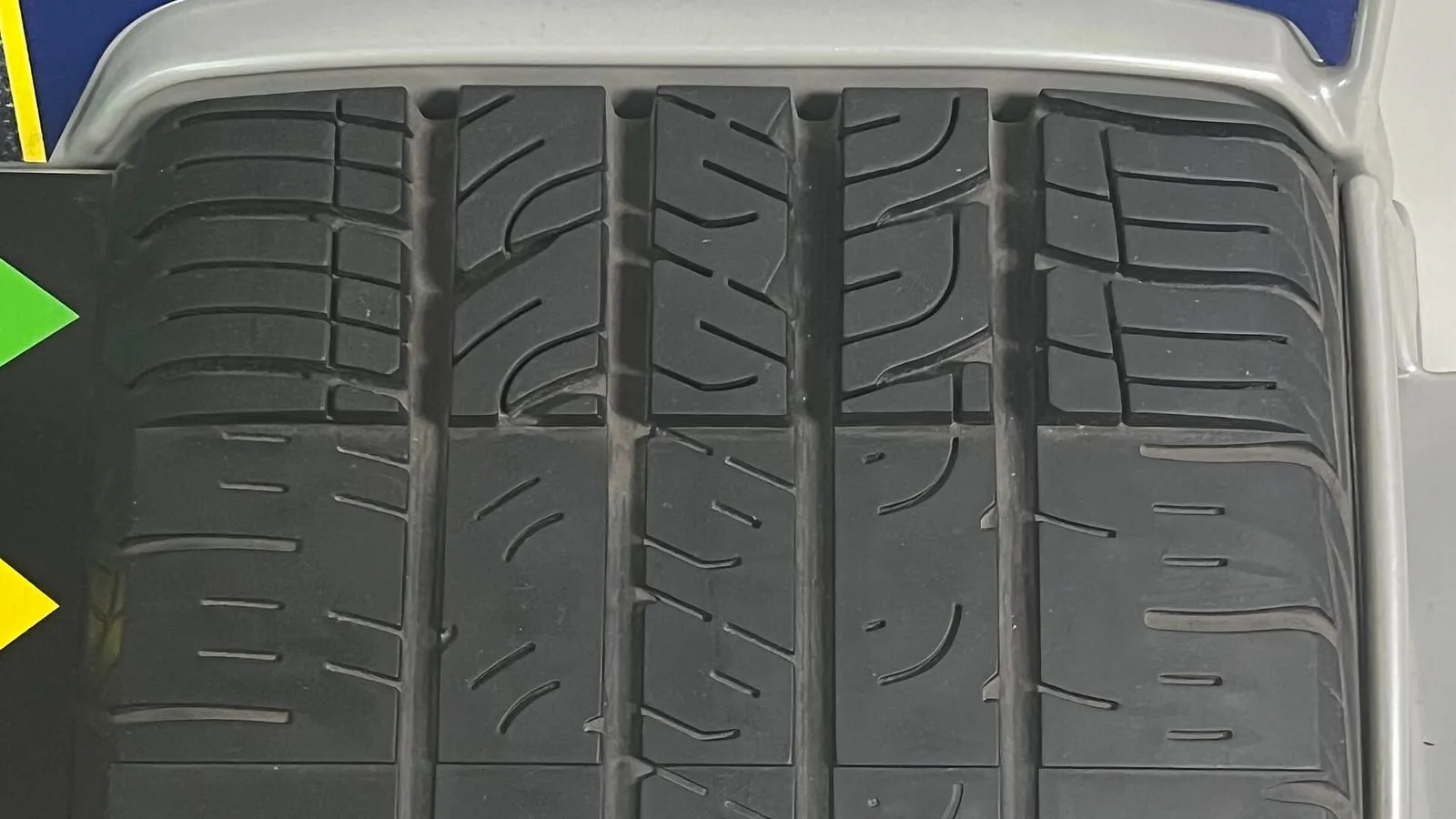
Tesla recommends rotating the tyres every 10,000 km, or as soon as the tread depth difference reaches 1.5 mm since the last rotation, whichever comes first source. Tesla tyre rotation is one of the few routine maintenance jobs on an electric car, and it comes round far more often than the annual check-up most owners have in mind.
Why the interval is so short
The manual calls rotation an essential part of tyre maintenance: it keeps the wear pattern even, cuts road noise and maximises tyre life. It adds that aggressive driving speeds up wear and may call for more frequent service source.
On a Tesla, two things make the issue sharper. The car is heavy, and torque reaches the driven axle instantly, so wear between front and rear can diverge faster than on a petrol car of similar size. That is why the tread depth criterion is worth watching alongside the odometer: if the gap reaches 1.5 mm before the distance is up, the rotation is due.
The interval also appears in the car’s list of scheduled maintenance items, next to the cabin air filter and brake fluid source. In other words, it is a planned job, not a reaction to a fault.
Staggered wheels: the rule changes
This is the part that surprises people. On cars with staggered wheels, where front and rear tyres are different sizes, the manual rules out front-to-back rotation. Non-directional tyres on those cars can only be rotated side to side, left to right and vice versa source.
The manual explains the benefit of that side-to-side swap: it changes the direction in which each tyre turns and balances shoulder wear, which can extend tread life. With the same size on all four corners, the usual pattern remains available.
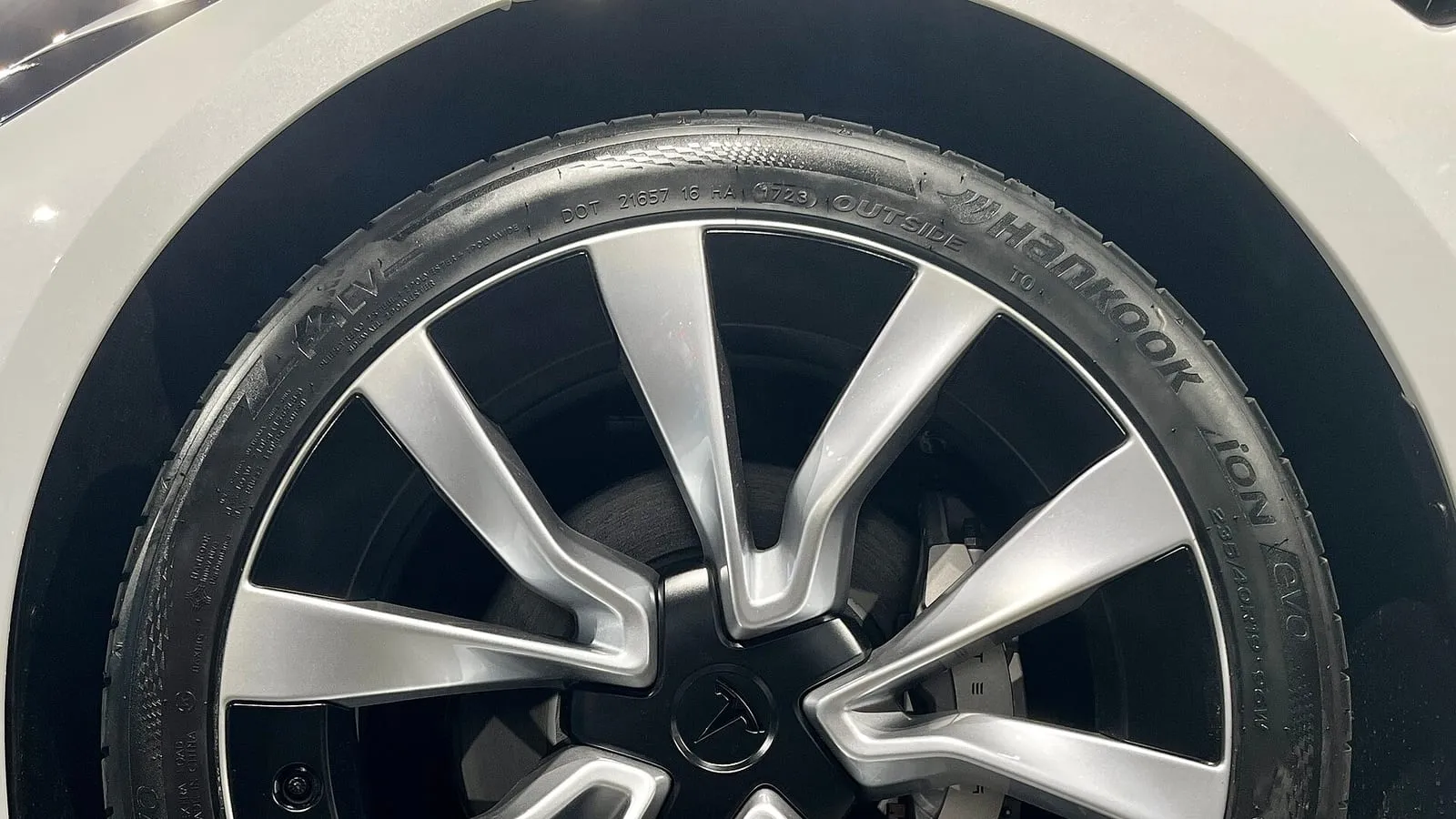
So before booking the job, read the sizes on all four sidewalls. If front and rear differ, your car runs staggered wheels and only a side-to-side rotation is allowed.
Balancing, alignment and the reset
Three neighbouring jobs deal with different symptoms, and the manual keeps them apart.
Unbalanced wheels affect handling and tyre life. The sign to look for is a vibration through the steering wheel, and the manual suggests booking a wheel balance when you notice it source.
Poor alignment shows up differently: uneven wear on one side of the tyre, or a car that pulls left or right while the steering wheel is held straight. The manual recommends an alignment in that case, noting that it protects handling, tyre life and steering components alike. It also recommends one after fitting a new set of tyres.
One last step is easy to forget. After tyres are rotated, replaced or swapped, update the tyre configuration from the touchscreen, either with Reset under Controls > Service or via Wheel & Tire > Tires. According to the manual, this resets the learned tyre settings and improves the driving experience source. On cars with indirect TPMS, a manual pressure calibration is also required once tyres have been rotated.
Sources
This article is for information only and written independently. Vehicle specifications and regulations can change: always check the sources cited before acting.