Driving a Tesla into the Alps: Switzerland's winter tyre advice and Italy's local rule
Switzerland sets no legal duty to fit winter tyres, yet a Tesla driver who slides off the road on summer rubber can still see an insurance payout cut afterwards source. Two hundred kilometres south, on the roads into South Tyrol, the same choice is not left to judgement: the Autonomous Province of Bolzano names the roads, the dates and the equipment by ordinance source. This guide to Tesla winter tyres in the Alps sets the two systems side by side, since a single trip south from Switzerland can cross both of them in one day.
Switzerland: a recommendation with a sting in the tail
The table sums up the two regimes as each authority states them. Neither replaces the signage on the road actually being driven, which can add or lift a requirement of its own.
| Where | Legal status | When | Tyres that qualify | If you don’t comply |
|---|---|---|---|---|
| Switzerland | Recommendation, not a law | October to Easter (ASTRA guidance) | Any tyre kept above 4 mm tread; the Alpine symbol is advised, not required | No direct fine; weaker liability and insurance position after an accident |
| South Tyrol (Italy) | Binding provincial ordinance | 15 November to 15 April, on named roads | M+S, M&S, M-S, or Alpine symbol (Q/160 km/h minimum if rated below the car’s top speed) | Enforced at the roadside like any other traffic sign |
The Swiss Federal Roads Office (ASTRA) states plainly that Switzerland has no winter tyre law: nothing extra is fined simply for driving on summer tyres in December. ASTRA’s own guidance instead runs October to Easter, the practical window in which it recommends winter tyres, because conditions can turn on a single mountain pass regardless of what the calendar says source.
Tread depth carries a similar gap between the law and the advice. Switzerland’s legal minimum is 1.6 mm, the same figure used across the EU, but ASTRA recommends mounting winter tyres only down to 4 mm, since a winter tyre’s grip on snow and ice falls away well before it reaches the legal limit source.
The absence of a dedicated statute is not the absence of consequence. ASTRA’s own wording is that a car must stay in a roadworthy and compliant condition; after an accident or a serious traffic obstruction caused by unsuitable tyres, a driver risks a fine, a licence suspension and an insurer that reduces or rejects the claim source. Because there is no specific winter-tyre law to check at the roadside, this exposure is judged after the fact, through general traffic and insurance rules, rather than at a checkpoint.
South Tyrol: a dated, named ordinance
Cross into South Tyrol and the same question gets a different kind of answer. From 15 November to 15 April, an ordinance of the Autonomous Province of Bolzano requires winter tyres or snow chains on the roads it names, for every vehicle except two-wheeled mopeds and motorcycles, which may only circulate when the road is free of snow and ice source.
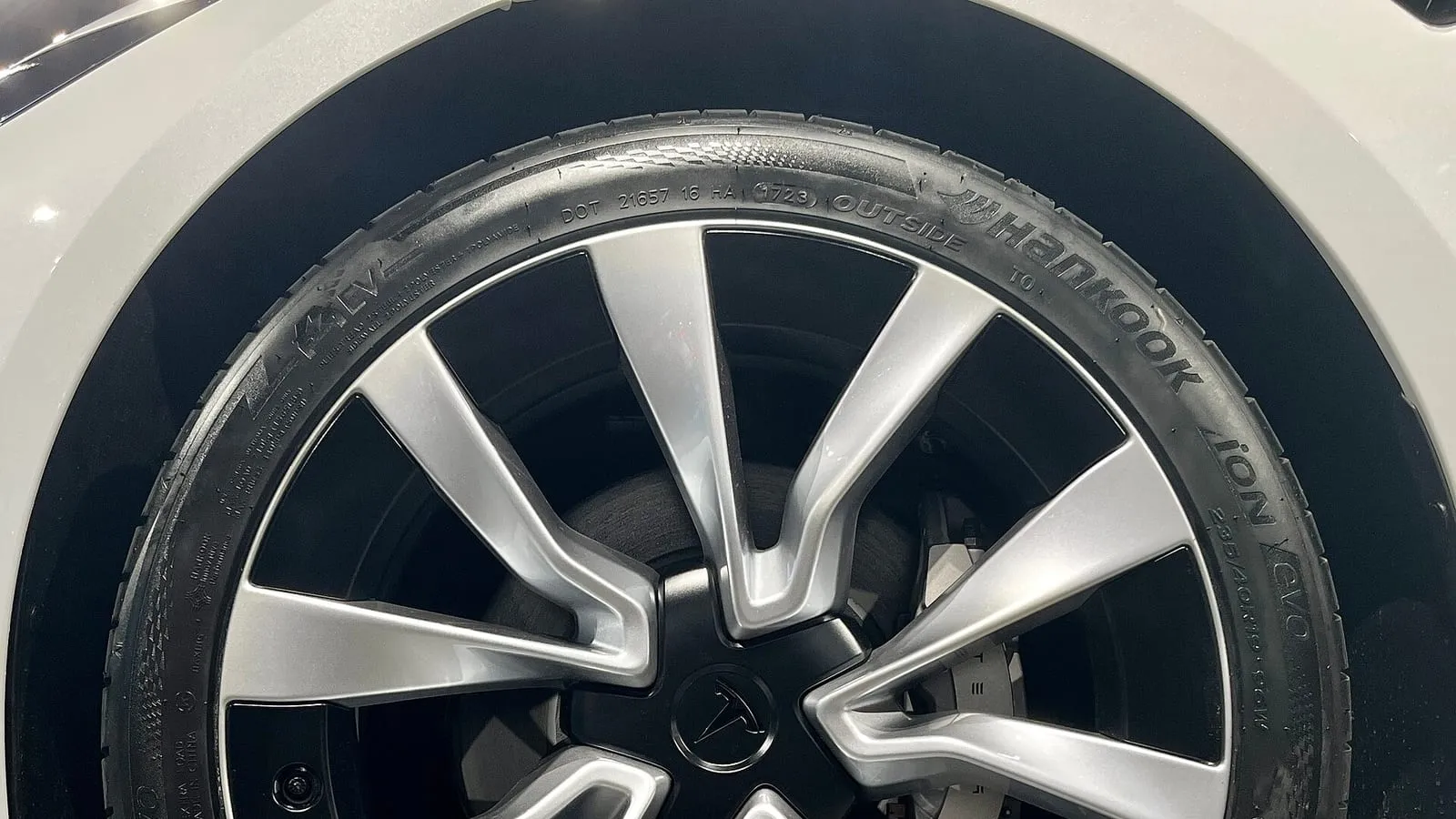
A qualifying winter tyre carries the marking M+S, M&S or M-S on its sidewall. Tyres with the Alpine three-peak-mountain-and-snowflake symbol are also accepted, including outside that window, from October 15 to May 15; if their speed rating falls below the car’s top speed, the minimum accepted is Q/160 km/h, and a notice of that speed limit must then be displayed inside the vehicle source. Fitting is required on all wheels of the drive axles, and for passenger cars and light vehicles under 3.5 tonnes the ordinance recommends going further and fitting all four wheels rather than only the driven ones source. For an all-wheel-drive Tesla, the drive axles already mean all four: Tesla’s own manual asks for winter tyres to be fitted as a complete set of four, never as a pair source, so the ordinance’s minimum and the manufacturer’s own instruction point to the same set-up on a Model Y or Model 3.
The Province’s own Motorisation Office administers this obligation under a provincial ordinance sitting on top of the national road code, not a single blanket Italian law source. In practice, it is the sign at the roadside, not the date on a calendar, that makes the obligation apply on a given road; a neighbouring Alpine province can set its own dates for its own roads, so a South Tyrol itinerary should not be assumed to cover a route through a different region.
One trip, two different tests to pass
Since neither country runs a single nationwide law, the simplest choice for a Tesla crossing from Switzerland into South Tyrol, or back, is a set of four tyres carrying the Alpine symbol. It satisfies ASTRA’s recommendation at any point in the October to Easter window, and it clears South Tyrol’s ordinance without the speed-limit placard a snowflake tyre rated below Q/160 km/h still needs.
Keep snow chains as the fallback either way. On a Model Y, Tesla approves them on the rear tyres only, in three sizes matched to wheel diameter, with wheel covers removed first and a speed kept under 48 km/h source — the same conditions set out in full in our guide to winter tyre rules across Europe. Neither the Swiss nor the South Tyrolean rule tells a driver which axle a manufacturer allows chains on; that answer only ever comes from the car’s own manual.
Before a trip that crosses both, two checks take a few minutes and settle the rest: read the tyre sidewalls for the Alpine symbol, and look at the road signs once inside South Tyrol rather than relying on the 15 November date alone, since a different province, or a stretch outside the named roads, can set its own terms.
The South Tyrol ordinance covers every vehicle on the named roads except two-wheeled mopeds and motorcycles source; nothing in either source ties it to where the car is registered. Treating the trip’s tyres as fixed before leaving, rather than as something to sort out at a service station near the border, avoids finding out which regime applies from a roadside sign or an insurer’s letter instead.
Sources
This article is for information only and written independently. Vehicle specifications and regulations can change: always check the sources cited before acting.