Low-emission zones across Europe: what a Tesla actually needs to display
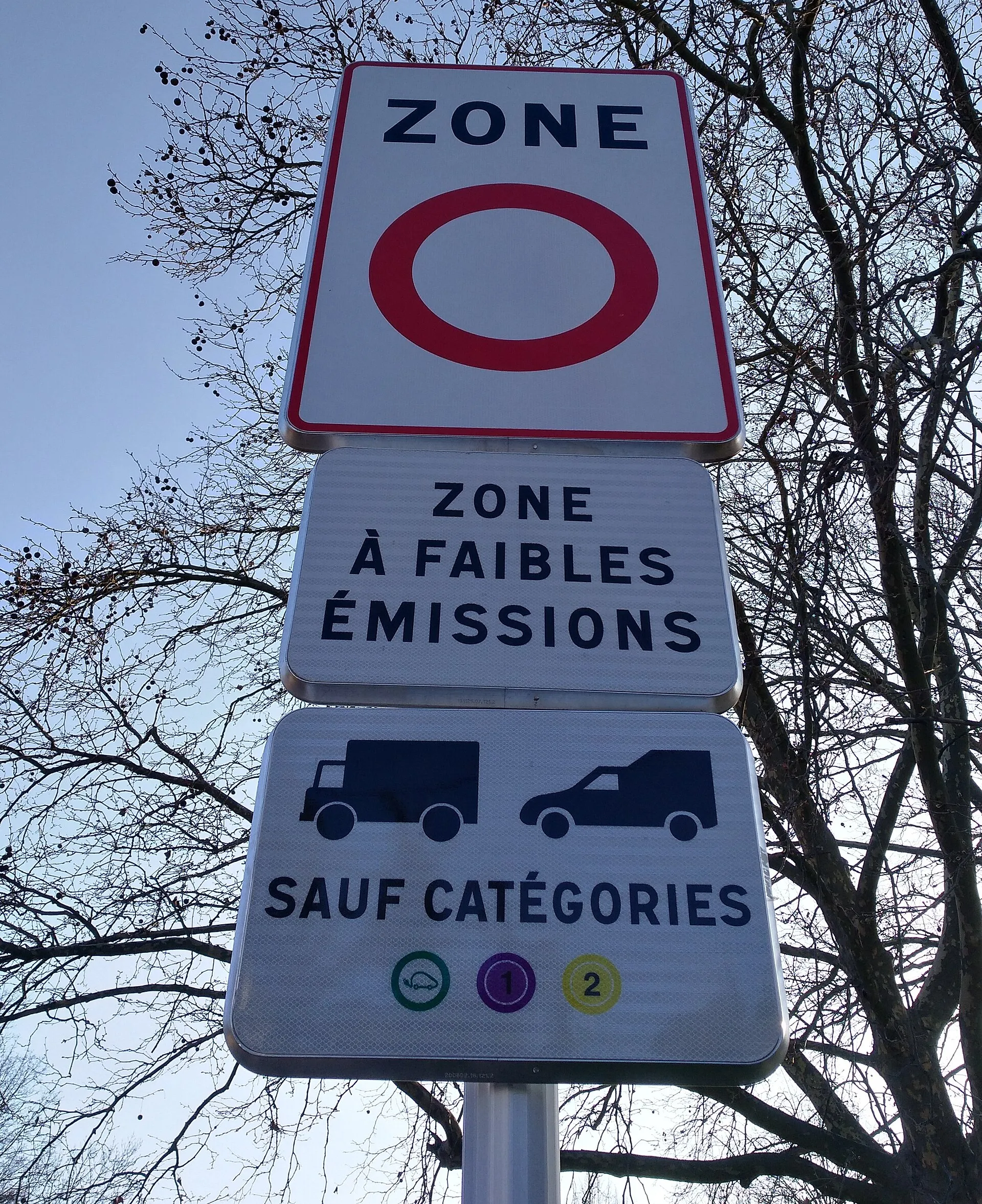
A Tesla clears every low-emission zone in France, Germany and Belgium without paying a cent, because each of those systems sorts vehicles by tailpipe emissions and a fully electric car has none source. But “free” is not the same as “nothing to do”: France and Germany still expect a sticker on the windscreen, and Belgium expects a foreign-plated car to register online before it crosses into Brussels, on pain of a fine source. Rome goes further still — since July 2026, being electric no longer buys free access to its historic centre at all source. This guide reads each country’s own rule at the source, so a European road trip does not stall at a city boundary over a sticker nobody remembered to order.
France and Germany: a sticker, but the cheap and simple kind
The table sums up what a fully electric Tesla owes each system, as each authority’s own page describes it. It does not replace checking the specific city on your route, since several of these rules apply zone by zone rather than nationwide.
| Country / city | System | What sorts vehicles | What a Tesla owes |
|---|---|---|---|
| France | Crit’Air certificate | Tailpipe emissions | A Crit’Air 0 sticker, ordered once, €3.11 plus postage |
| Germany | Umweltplakette | Tailpipe emissions | A green sticker — free of the requirement only with a German “E” plate |
| Brussels, Antwerp, Ghent | Low Emission Zone (LEZ) | Tailpipe emissions | Nothing to buy, but a foreign plate must register online first |
| Rome | Zona a Traffico Limitato (ZTL) | General traffic and parking, not emissions | A paid annual permit since 1 July 2026, unless already exempt |
France’s Crit’Air certificate classifies every vehicle from 0 to 5 by how much it pollutes, and a fully electric car gets the top class, Crit’Air 0 source. It is only compulsory inside a low-emission zone (ZFE-m) or during a pollution episode with differentiated traffic rules, but a Tesla stopped without one in a zone that requires it can still be fined, so it is worth ordering before a trip rather than after arriving. The certificate itself costs €3.11 plus postage, is ordered once from the official government site, and stays valid for the life of the car as long as it remains legible, with readability checked at the technical inspection source. Crit’Air 0 grants unrestricted access to all of France’s active ZFE-m zones and to traffic during pollution episodes, with no city-by-city exception to check, and French rules require any ZFE-m to be set up in every agglomeration of more than 150,000 inhabitants that regularly exceeds World Health Organization air-quality guidance source. That threshold is why the certificate is worth ordering even for a Tesla that rarely visits a city: new ZFE-m zones can appear in agglomerations that did not have one before, and Crit’Air 0 already covers them all.
Germany runs the same idea under a different name. Its 36 Umweltzonen have only ever accepted the green Umweltplakette since 2025, and until very recently every electric car needed one fitted, exactly like a clean diesel would — being emission-free never, on its own, exempted a car from carrying the sticker source. That changed on 25 September 2026, when the Bundesrat approved dropping the sticker requirement for cars carrying a German “E” number plate — see the full story on what that vote actually changes and when it is expected to take effect. The exemption is written around the German plate itself, so it only benefits a Tesla registered in Germany. A Tesla plated in another European country still needs the ordinary green sticker to enter a German Umweltzone: the blue “E-Plakette” some German cities hand foreign electric cars for local perks such as reserved parking is a bonus on top of that requirement, not a substitute for it source. In practice, a Tesla owner based outside Germany gains nothing from the September decision and should keep ordering the green sticker exactly as before any trip through a German city.
Belgium: no sticker, but register before you cross into Brussels
Brussels, Antwerp and Ghent each run their own low-emission zone, and a fully electric car is automatically compliant with all three: fuel type alone clears it, with no Euro-standard test to pass and no exemption certificate to apply for source. The catch is administrative rather than technical. A car registered outside Belgium still has to register itself on the official lez.brussels portal before entering the Brussels-Capital Region, giving its fuel type, category and Euro standard so the system can record it as compliant; the registration itself can be done by the owner or by someone else on their behalf. Registration is free, but skipping it exposes an unregistered foreign vehicle to a €150 fine, regardless of how clean the car actually is source. Antwerp and Ghent run their own separate low-emission zones under the Flemish system rather than the Brussels-Capital Region’s, so a registration made for Brussels does not carry over to either Flemish city, and a route touching more than one of these three cities is worth checking against each city’s own portal rather than assuming one registration covers the whole trip.
Italy: Rome now charges an electric car for its historic centre
Rome’s Zona a Traffico Limitato (ZTL) is not an emissions rule at all — it restricts general traffic in the historic centre regardless of what a car emits, which is why it can, and now does, treat an electric Tesla differently from how Crit’Air or the Umweltplakette would. Until June 2026, a fully electric or hydrogen vehicle could register online and enter Rome’s ZTL for free. From 1 July 2026, that free access ended: any electric or hydrogen vehicle without an existing ZTL right (such as residents’) now needs a paid permit, priced at €1,000 a year, and the city’s own notice is explicit that this applies to visiting drivers with foreign-registered cars as well as to residents source. Applications opened on 16 June 2026 through Roma Servizi per la Mobilità’s online service, using SPID or CIE identity verification, or in person by appointment, and any permit issued before 1 July took effect on that date source. A handful of categories keep free or reduced access — taxis, car-sharing, disabled permit holders and vehicles that already carried a ZTL right — but an ordinary electric car passing through Rome no longer qualifies simply by being electric. Other Italian cities have not followed Rome’s move. Turin, for one, still issues its own free transit permit for “purely electric” vehicles into its ZTL, a scheme its city council has extended out to 31 December 2026, with only a €16 stamp duty due when applying and again if the permit is granted source. So the Roman rule does not generalise to the rest of the country, and it is worth checking the ZTL rule of each Italian city on a route separately rather than assuming Rome’s new fee applies everywhere.
Put together, these four systems reward the same drivetrain very differently. A Tesla crosses France, Germany and Belgium’s low-emission zones for the cost of a stamp and a few minutes online, provided the right paperwork is in the car or on file before it arrives — the €3.11 French certificate, the German green sticker where the plate is not German, and a free Brussels registration for anything not plated in Belgium. Only Rome turns that logic on its head, charging an electric car €1,000 a year for access its low-emission credentials alone would once have granted for free. None of this changes what a Tesla can do on the motorway between these cities: it is purely about the last few streets into each historic or restricted centre, and it is exactly the kind of rule that a route planned well in advance can absorb without a fine at the boundary.
Sources
- certificat-air.gouv.fr (France) — the official Crit'Air certificate site
- Ministère de la Transition écologique (France) — Certificats qualité de l'air : Crit'Air
- Bundesrat — BundesratKOMPAKT, 1068th plenary session (25 September 2026)
- TÜV Nord — Blue E-Plakette for vehicles registered outside Germany
- lez.brussels — Low Emission Zone, general information for foreign-registered vehicles
- Comune di Roma — ZTL access for fully electric or hydrogen vehicles, changes from 1 July 2026
- Città di Torino — Free ZTL transit permit for fully electric vehicles
This article is for information only and written independently. Vehicle specifications and regulations can change: always check the sources cited before acting.