Tesla charging without a driveway in England: pavement cables, grants and what is still to come
If you park on the street in England, there are three ways to charge at home: a cable channel across the pavement, a grant towards a socket, or the lower-powered public chargers near your home. The first is the one that changed. Since 21 October 2026 it needs no planning permission, although the highway authority still has to authorise it source. The grants pay up to £500 and run to 31 March 2027 source. The public-charger plan is funded but starts later.
Route one: a cable channel across the pavement
A cross-pavement solution is a channel set into the pavement that lets a charging cable reach a car parked on the street from a house. Under the Town and Country Planning (General Permitted Development) (England) (Amendment) (No. 2) Order 2026, which is SI 2026/1056, installing one no longer needs planning permission from 21 October 2026 source. The order applies to England only, because it amends the planning rules for England source.
The right is narrower than the headline. It covers work done by, on behalf of, or with the authorisation of the relevant highway authority, and it does not let residents install a channel on their own source. In the order, an “authorised” solution is one installed by or with the highway authority’s authorisation source. So the highway authority is the body whose authorisation the channel needs.
The right also leaves out some places. It does not apply in conservation areas, on scheduled monuments, or within the curtilage of listed buildings source. When a channel is no longer needed, it must be removed and the pavement reinstated to its previous condition as soon as reasonably practicable source.
The socket at the house end has limits too. Under the amended Class D, a wall-mounted outlet cannot be more than 1.6 metres above ground level. Where the wall adjoins the highway, it cannot stand out more than 0.2 metres from the wall, and at least 1.5 metres of footway must remain between the outlet and the edge of the carriageway source. Outside an off-street parking area, the right is also limited to one outlet within the curtilage of a house or block of flats, and it does not apply in a conservation area source.
The government puts the saving at up to £300 on installation, and says home charging could work out at as little as 2p per mile source. Those are the government’s figures, not quotes for any particular installation, and the cost of your own installation depends on your council’s process and your installer.
Route two: a grant towards one socket
Two grants aimed at homes run until 31 March 2027, each providing up to £500 towards a chargepoint at your property: the grant for flats and renters, and the grant for households with on-street parking source. On 1 April 2026 the maximum rate for residents rose from £350 to £500 per socket, and residents can apply for one socket source.
For the flats and renters grant, you can apply if you own a flat, including a shared-ownership flat, or if you rent a residential property source. Two conditions are easy to miss. The property must be in the UK, and the grant is only for vehicles on the list of OZEV-approved electric vehicles, so check your car is on that list before you apply source. You also need proof of your legal rights and permissions, such as the freeholder’s agreement for a block of flats source.
The order of steps matters. Customers must not have their chargepoint installed until they receive notification from OZEV that they are eligible for the grant, and the installer is notified at the same time source. Applications for the flats and renters grant moved to a new platform on 1 April 2026, and you start from the “Start new application” button on the guidance page source. Installing first and applying afterwards is the mistake to avoid.
The on-street household grant is listed alongside these, with the same £500 ceiling and the same end date source. Read its own eligibility page before applying, because the criteria are not the same as those for flats and renters.
The government also keeps the right to change the rules. It says it “reserves the right to end or change the grant schemes”, and that if a grant ends or its amount changes, it will honour claims made before any public announcement, subject to the grant criteria source.
Route three: the public chargers near home, and what is still to come
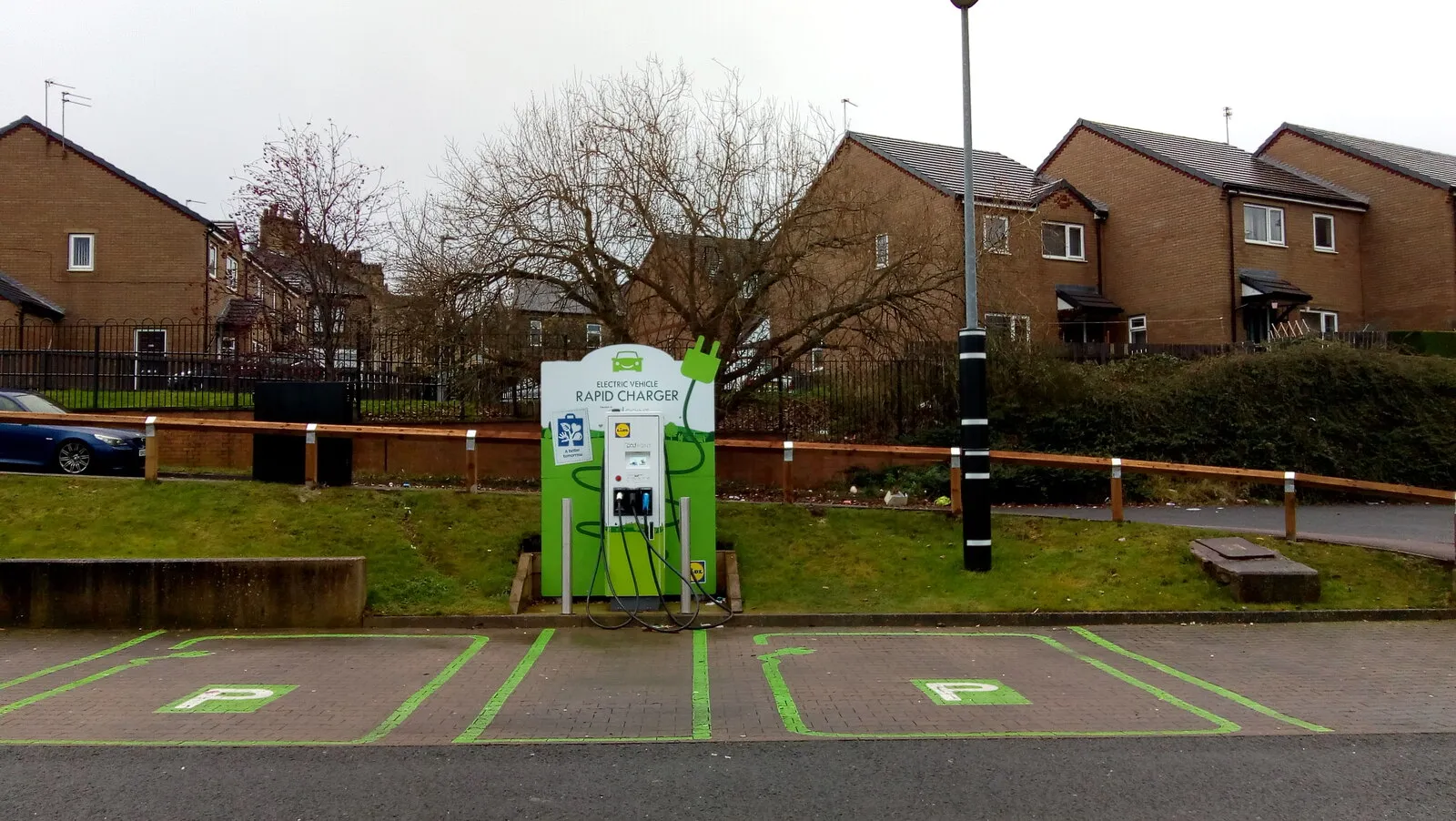
If a socket at home is not possible, the other option is the lower-powered public charger on your street. On 28 October 2026 the government said it will put £100 million over two years behind cutting prices at these chargers, from spring 2027 source. They are the chargers typically found on residential streets, where you leave the car for several hours or overnight source. The government estimates the saving at around £150 a year on average source. Our news story on that announcement has the detail and the one date that sources disagree on.
The same release says a “tariff porting” taskforce will explore letting drivers use their cheaper domestic energy tariff at certain public chargers. The department will set out more details in due course, so nothing in that part changes at the charger yet source.
Two government consultations on home charging are also open, with responses due by 16 December 2026 source. One covers amending the building regulations for EV charging infrastructure. The other covers access for tenants and leaseholders. The government says it is considering mandatory requirements for landlords and freeholders, which would make it harder to refuse a renter’s request, and that building regulations could be updated so chargers go into new and refurbished covered car parks source. None of those is in force yet.
Where to start
For most people without a driveway, the order is simple. Check whether your council has a process for cross-pavement channels, and whether your street is one where a channel is possible. Check whether you are eligible for one of the grants, and that your car is on the approved list. Get your rights and permissions in writing before the work starts. Do not have anything installed until the grant notification arrives.
The rules are England-specific. The planning change covers England only, and the grant schemes listed here are the UK government’s source. Each country’s own rules apply elsewhere, so check them before you plan a home installation outside England.
Sources
- GOV.UK (DfT) — Drivers to save up to £300 when installing EV chargers at home (21 October 2026)
- legislation.gov.uk — The Town and Country Planning (General Permitted Development) (England) (Amendment) (No. 2) Order 2026, SI 2026/1056
- Planning Portal — Government introduces new permitted development rights for cross-pavement EV charging
- GOV.UK — Electric vehicle chargepoint grants
- GOV.UK — Changes to electric vehicle chargepoint grant schemes from 1 April 2026
- GOV.UK — Electric vehicle chargepoint grant for renters or flat owners: eligibility
- GOV.UK (HM Treasury) — Cutting electric vehicle charging costs (28 October 2026)
This article is for information only and written independently. Vehicle specifications and regulations can change: always check the sources cited before acting.