EV charging card payment rules in Europe: what AFIR requires, and by when
Since 13 April 2024, EU law has required most newly installed public charging points to let you pay with an ordinary bank card, with no account or app required first, under the Alternative Fuels Infrastructure Regulation, Regulation (EU) 2023/1804 source. What changes on 1 January 2027 is that the same requirement starts applying to high-power points that were already standing before the regulation existed. For a Tesla crossing borders on a road trip, that is the practical end of needing a different charging app or membership card for every country you pass through, at least at the higher-power chargers the rule covers.
What the regulation already requires, and what 2027 adds
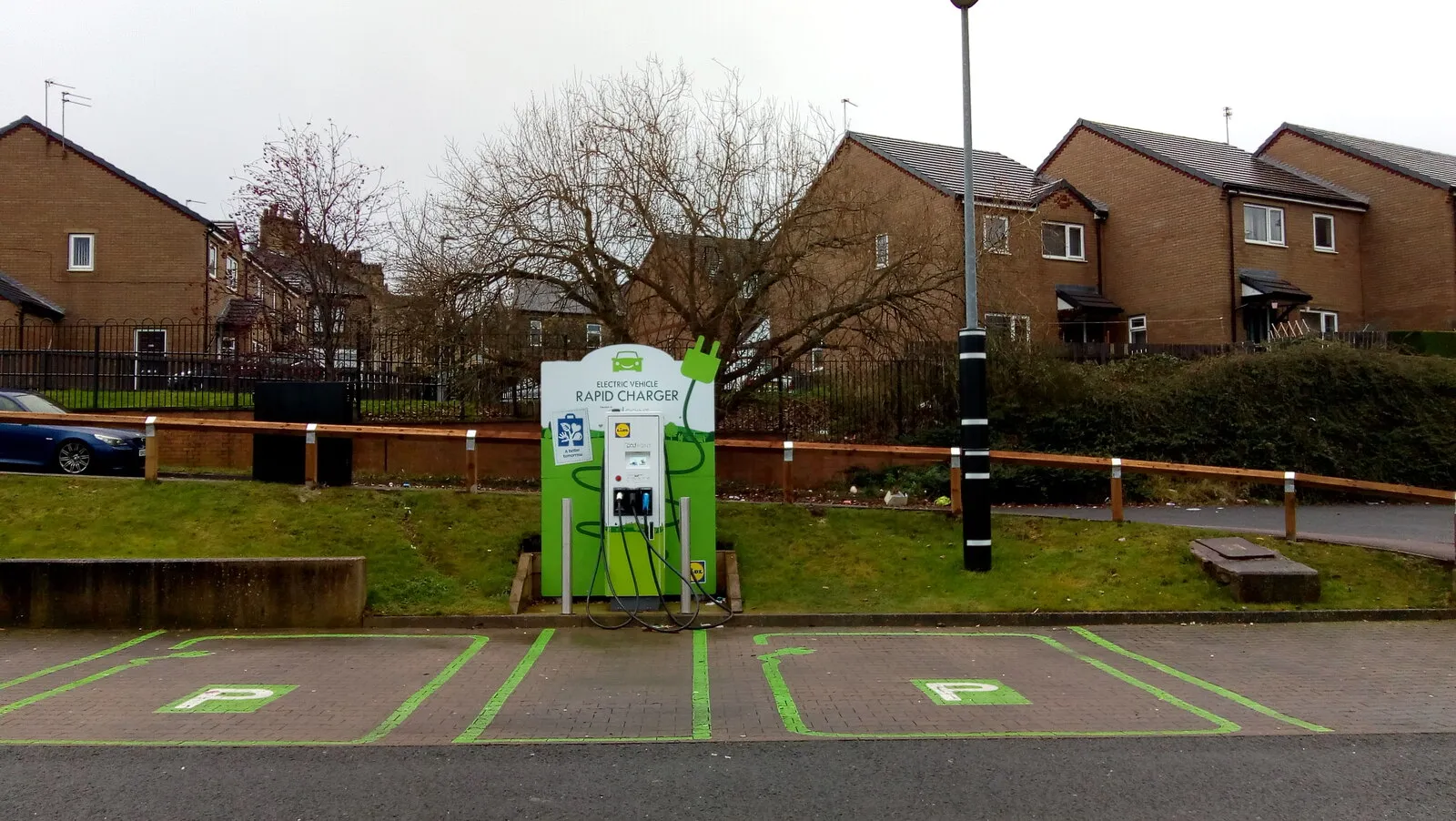
Article 5(1) of the regulation says operators of publicly accessible charging points must let drivers pay on an ad hoc basis, without a contract or prior registration with that network, using a widely used payment instrument source. For points deployed from 13 April 2024, that means accepting at least one of: a payment card reader, a contactless device able to read ordinary bank cards, or, only for points under 50 kW, an internet-connected option such as a QR code linking to a payment page source. Points of 50 kW or more cannot rely on a QR code alone: a physical card reader or contactless terminal is required. The European Commission’s own guidance on the regulation spells out two things that do not satisfy the rule: paying in cash only, and a terminal that only accepts the charge-point operator’s own app or an app from a mobility service provider, since that still forces a driver into a contract with that specific company source. The same guidance separately sets out how prices have to be shown: for a point of 50 kW or more, the price per kWh has to be displayed at the charger itself, while for a slower point the operator can instead make the full breakdown, price per kWh, per minute, per session and any other component, available electronically, for instance through a QR code pointing to that information, provided it is shown in that order source.
The change arriving on 1 January 2027 closes the gap that date left open. From that day, the card-or-contactless requirement also applies to publicly accessible points of 50 kW or more on the trans-European transport road network or in secure parking areas, explicitly including ones that were deployed before 13 April 2024 source. In practice, that is the deadline for older, already-installed fast and rapid chargers along Europe’s main road corridors to be retrofitted with a card reader or contactless terminal, if they do not already have one.
A separate, earlier deadline in the same regulation is easy to confuse with the payment rule but covers something else: Article 5(7) required operators to have all their publicly accessible points digitally connected by 14 October 2024, so that real-time data on price, availability and status can be shared, which is what lets a navigation app or Tesla’s own trip planner show whether a charger is free before you arrive source. That digital-connection duty is about data, not payment, and it is already in force everywhere the regulation applies.
What this means for a Tesla charging on someone else’s network
For a Tesla owner, the regulation matters most away from Tesla’s own Superchargers, at the rapid chargers run by other networks that you meet while driving through a country where you have never charged before. Today, many of those operators already expect you to have their own app or a roaming card; after 1 January 2027, every one of their points at 50 kW or more has to offer a fallback that needs none of that: tap your bank card, or hold your phone’s digital wallet to the reader, and the session starts source. The Commission’s guidance confirms that a card already stored in a digital wallet issued by a bank counts as a valid payment instrument for this purpose, so there is no need for a special charging-specific card at all source.
Tesla’s own network is adapting to the same rule, not just third-party operators. Drive Tesla Canada reported that newer V4 Supercharger stalls installed in Europe, including a station in Graz, Austria, now carry a contactless credit card reader built into the unit beneath the cable dock, which it linked to European payment regulations requiring a card-based option at charging points source. That reader is there for people without a Tesla account, not for existing owners: as a Tesla driver, your own Supercharger sessions are still recognised automatically through your car and billed to the payment method on your Tesla account, exactly as before.
Where the rule stops, and what it does not promise
The regulation sets a payment method, not a price. Article 5(4) separately requires that, at points of 50 kW or more, the ad hoc price be based on a rate per kWh of electricity delivered, with only a per-minute occupancy fee allowed on top to discourage drivers from blocking a charger once their session is finished source. Nothing in the regulation caps how high that per-kWh rate can be, and nothing in it guarantees that a 50 kW or faster charger exists wherever you happen to be: the 1 January 2027 retrofit duty applies specifically to points on the trans-European road network or in secure parking areas, not to every socket in every country source. What the rule change does guarantee, across all 27 EU member states, is that wherever one of those qualifying chargers exists, your Tesla’s own account is no longer the only way to pay for a session on it — an ordinary bank card will do the same job.
It is also worth being clear about where this particular rule stops applying. Regulation (EU) 2023/1804 is an EU regulation, binding on the Union’s 27 member states; it is not, by itself, a rule in the United Kingdom, Switzerland or Norway, none of which are EU members source. A Tesla owner driving a round trip that leaves the EU, say from Germany into Switzerland or from France across to the UK, is leaving the territory where this specific card-payment guarantee applies, even though the charger on the other side of the border may look identical to the one just left behind. Whatever each of those countries requires of its own charging operators is a separate question, with its own sources, for another day.
Sources
This article is for information only and written independently. Vehicle specifications and regulations can change: always check the sources cited before acting.